
Ready-made template vs custom website — gains and trade-offs
You are about to build a website for your shop, your eatery, your homestay — and you are torn: grab a ready-made template for speed, or have one built from scratch? Both have their place; neither is wrong. This piece lays out what you gain and what you give up with each, so you can pick what fits your budget and your goals.
What a ready-made template is
Simply put, a template is a site already built around a fixed layout. Someone designed the structure, the colors, the slots for photos and text in advance. Your job is to drop in your shop name, swap the images, and type your content into the slots left open. Like buying a finished house — you just move your furniture in and hang your own pictures.
Say a woman selling snacks online picks a “shop” template, changes the logo, swaps the product photos, edits the prices — and she has a page ready to send to customers. No waiting for anyone to redraw it, no back-and-forth. That is the biggest strength of a template: fast and cheap.
What you gain with a template
The first gain is speed. A pho shop that just opened needs a page right away so customers can find the address, see the menu, and tap to call for a table — with a template that takes a few days, sometimes the same day. You do not have to pause selling to wait on it.
The second gain is low cost. When money is tight, spending a little to show up online still beats having nothing. For simple needs — introduce the place, post a menu, list a contact number and a map — a ready-made page is usually plenty.
- Goes live fast, sometimes ready for customers in a day or two.
- Costs little, which suits a new opening counting every expense.
- Covers the basics: intro, menu or price list, contact, directions.
Honestly: if all you need is a spot online where customers find you and tap to call, a template is nothing to be ashamed of. Do not let anyone make it feel “cheap”. Fitting your need is what matters.
What you give up with a template
The clearest loss is looking like everyone else. A template you can use, others can use too. Two spas in the same area pick the same one and the pages look alike — customers struggle to tell who is who. In a trade where people choose by a feeling of being upscale and distinct, sameness is a strike against you.
The second loss is being hard to customize. Today you want a booking section by time slot, tomorrow a way to price homestay rooms by season — a fixed template often will not allow it, or only with painful workarounds. You are boxed into what the template already imagined for you.
The third loss is that the page is sometimes heavy and slow. A template has to please many kinds of users, so it carries a lot you do not need. On a phone the content takes a while to appear, and a short wait sends people away. On top of that, you depend on the platform: if the seller changes the rules, raises the monthly fee, or shuts down, you are stuck chasing it.
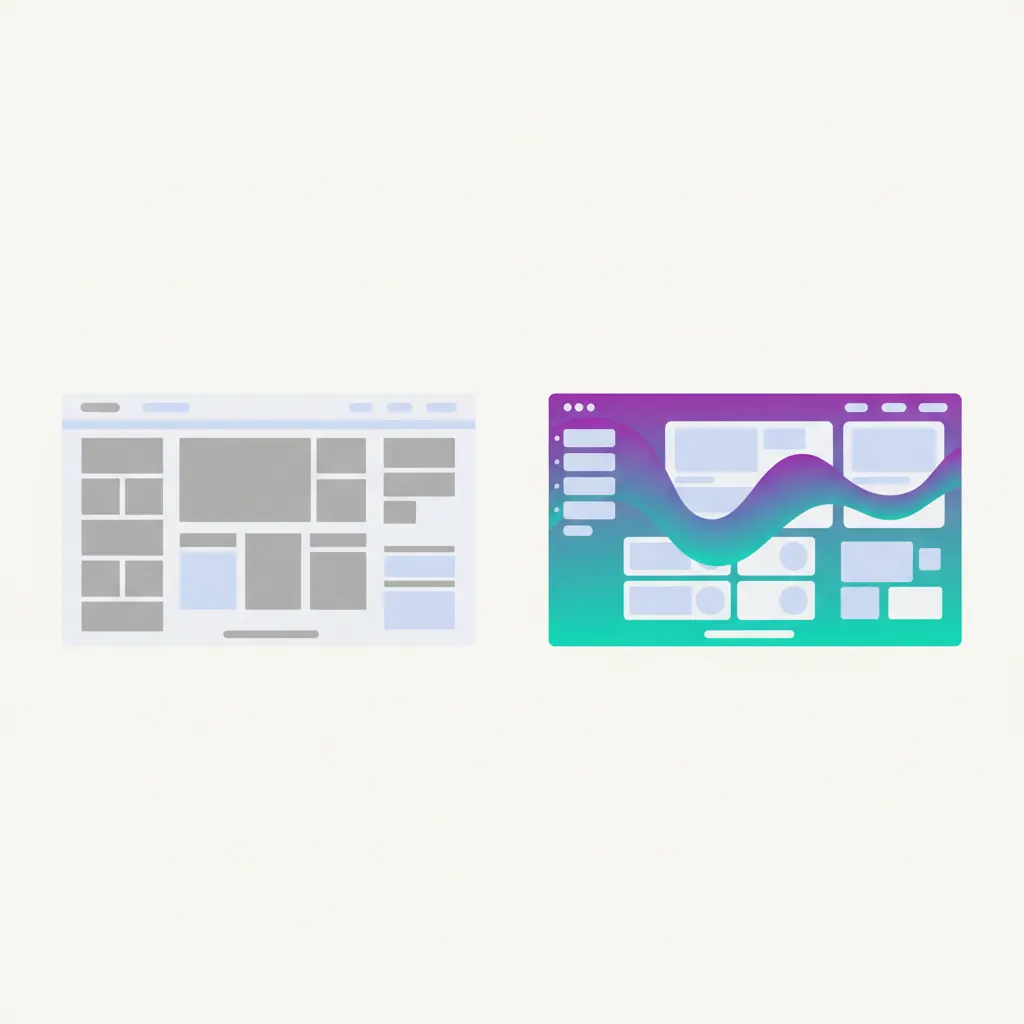
A template drops your text and photos into a fixed shell — fast, but the layout is decided in advance.
Custom: what you gain and give up
Custom means building the page around your exact needs and your own identity, not forced into any template. The biggest gain is a page that is exactly what you need and carries your own mark. An upscale homestay can run full-screen room photos, handle booking the way it actually charges, and tell the owner’s story in its own flow — things a fixed template struggles with.
Custom builds also tend to be lighter and faster, since they keep only what is needed and drop the rest. And because it is yours, adding features later is easy. A spa that needs only an intro page today may, next year, want bookings, package sales, and loyalty points — a custom base saves you from tearing it down and starting over.
In return, custom costs more in money and time. Drawing, reviewing, and tweaking back and forth takes longer than grabbing a template. And you need to pick the right builder — the wrong one wastes both money and effort. This is an investment, so weigh it against your goals, not against keeping up with others.
- Gain: fits your needs, carries your mark, runs light, grows easily later.
- Give up: more money and time, plus the work of finding a decent builder.
So how do you choose
There is no one answer. Look at two things: what you want, and what you have on hand. A newly opened eatery, short on funds, that just needs to be found and called — a tidy template is plenty, so keep the money for the kitchen and the customers. On the other hand, a brand that wants to stand out, plays the long game, and lives on its image like a spa or upscale homestay — custom is worth the money, because what customers remember is the difference.
A perfectly fine path is to start with a template, then upgrade later. Early on, use a template to show up fast and spend little. Once the place is busy and you understand your own needs better, a custom build will hit the mark instead of guessing. Spend at the right time, not all at once up front.