
Freelancer, agency, or DIY with Wix/WordPress?
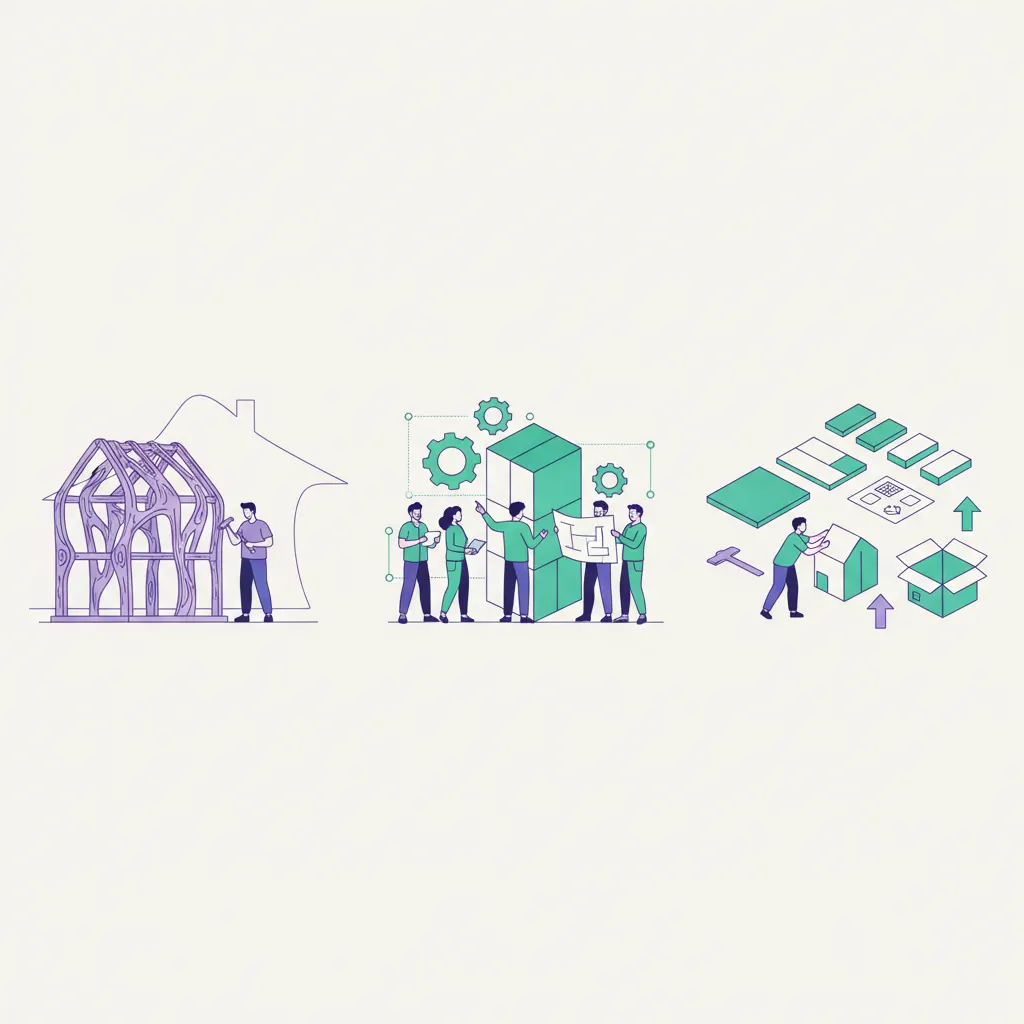
You want a website or a landing page for your shop, your homestay, your café. You ask around and get three opposite answers: one says just build it yourself on Wix to save money, one says hire a freelancer you know, another says go with an agency to be safe. This post is here to help you see each path clearly — by budget and by your situation — instead of picking whoever spoke the loudest.
Four things to weigh before you choose
Before we argue which path is better, pin down four questions. Once you answer these, you almost know which one fits you.
- Cost: how much are you willing to spend up front, and each month after?
- Time and effort: do you have hours to tinker yourself, or do you want to hand it all off?
- Control and quality: how polished does the page need to be, and do you need anything custom?
- What happens after: when the page breaks, a price changes, a new section is needed — who handles it?
Keep these four in mind as you read. Each path is strong on some and weak on others; none wins on all four. Your job is just to pick the one that fits you right now.
Build it yourself with Wix or WordPress
Wix and WordPress let you build a page by dragging and dropping: pick a ready-made template (a pre-built page skeleton), then swap in your own words and photos. No coding needed.
This is the cheapest path. Wix has plans for a few dollars a month; self-hosted WordPress is even cheaper, mostly the cost of a domain and somewhere to host the site. You are also fully in charge — want to change a photo or a price at midnight, you open your laptop and do it, no one to wait on.
But the real cost is your time. A homestay owner in the quiet season with empty rooms can happily spend a couple of evenings putting up a basic rooms page — that makes sense. But if you run a noodle shop on your feet from morning to night, with only enough energy to hold your phone at the end of the day, teaching yourself Wix easily turns into a chore that never gets finished.
Two things tend to trip people up. First, the page can look like the template — visitors feel a vague déjà vu because thousands of others use that same skeleton. Second, when you want something off-template (a special booking flow, or a page that loads really fast on phones), the drag-and-drop tool often blocks you, or the page slowly gets heavy and slow with no obvious place to fix it.
Fits you if: you have the time, a very small budget, simple needs, and don’t mind teaching yourself over a few evenings.
Hire a freelancer
A freelancer is an independent solo worker who takes on web projects one at a time. This path is flexible, fairly priced, and usually cheaper than an agency. You talk straight to the person doing the work, with no middleman, so things move fast and decisions stick.
The trade-off is that quality is a bit of a gamble. A great freelancer is well worth it, but it’s hard to know in advance which kind you’ve got. And because one person carries everything (design, copy, the technical bits), if they get swamped or fall ill, your project slips with them. For example, an online food shop hires a freelancer to build a landing page for the holiday season; they pick up three more projects at once, your page slides week after week, and by the time it’s done the season is gone.
The biggest risk is the part after handover. The page is done, paid for, and a few months later you need to change a price or add a promo section — you message them, but they’re deep in another project, slow to reply, or simply vanish. Now you’re stuck, because not everyone can jump in and edit a page someone else built.
Fits you if: the project is small to medium, you already know fairly well what you want, and you’re willing to vet people carefully — look at a few pages they’ve built, and ask directly about support down the road.
Three ways to get a website, each strong and weak in different places — choose by your situation.
Hire an agency or a team
An agency is a company or team of several people, each handling one part. This path is structured, with a clear process. Because there are several people, you depend less on any one individual — if someone’s out, another picks up the work. They usually have someone to care for the site after handover, a contract, and a place to call when something goes wrong.
In return, it costs more, and for small jobs the process can feel like overkill. A spa that just needs a tidy booking page might have to sit through several meetings, a brief, and rounds of approvals — slow, and more than the need calls for. A big agency may also push your small project behind its larger clients.
Fits you if: you need something polished, on schedule, with long-term care — and your budget has a little more room.
So who fits which
Grouped by situation and budget, to make it easy to picture:
- Very small budget, time on your hands, simple needs (a few-section intro page) → build it yourself on Wix/WordPress. Like the off-season homestay owner.
- Medium budget, need it done fast, you know what you want, just one page → a freelancer. Vet them well and settle the future-edits question up front.
- Need it polished, on time, for the long run, with someone to care for it → an agency or a team.
A small note on money: don’t look only at the first price. A website keeps costing later — content edits, renewing the domain and hosting, the odd new section. A path that’s cheap at the start but leaves you to figure it all out, or to hire someone else to clean it up later, isn’t necessarily cheap.
There’s also a middle path many small-shop owners pick: a small team that focuses on landing pages. Quick and roughly freelancer-priced, but structured and with someone to care for it afterward like an agency — because it’s a group, not one person carrying everything.